
 Across Connecticut, conversations about school funding continue as educators, policymakers, and communities examine how the state’s Education Cost Sharing (ECS) formula supports public schools. The formula determines how state funding is distributed to school districts and plays an important role in helping communities meet the needs of their students. Because the foundation amount used in the formula was last set in 2013, discussions have taken place in recent years about how rising costs and changing student needs factor into school budgets across the state.
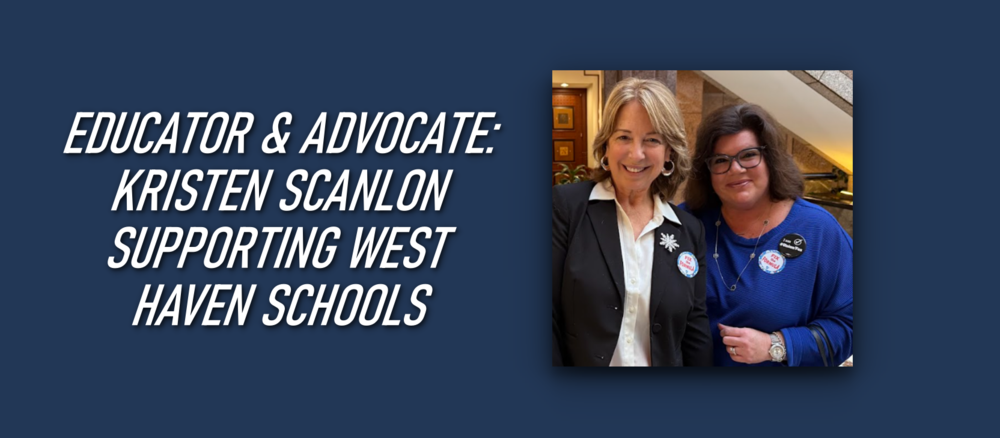
One of the educators participating in these discussions is Kristen Scanlon, a literacy teacher at Savin Rock Community School in West Haven with 28 years of experience. She began her career as a fourth grade teacher, a role she held for 13 years, and for the past 15 years has served as the school’s literacy teacher. In addition to her work supporting students and teachers, she serves as President of the West Haven Federation of Teachers and School Nurses (WHFT), where she has been involved in recent advocacy efforts related to state education funding.
When asked about her role and how it supports reading outcomes, Scanlon explained, “My role as a literacy teacher focuses on helping students develop strong reading, writing, speaking, listening, and comprehension skills. In particular, I provide direct instruction to struggling readers and target support to help students become better, confident readers and writers.” She also explained that assessing students’ progress and reading levels is a key part of the work because it helps guide instruction and student support. The role includes collaborating with teachers, sharing reading strategies with families, organizing literacy nights, coordinating guest speakers and field trips, providing professional development, revising curriculum, and inviting community members to participate in activities such as Read Across America Day. According to Scanlon, these efforts help support students while creating a school culture that values reading and learning.
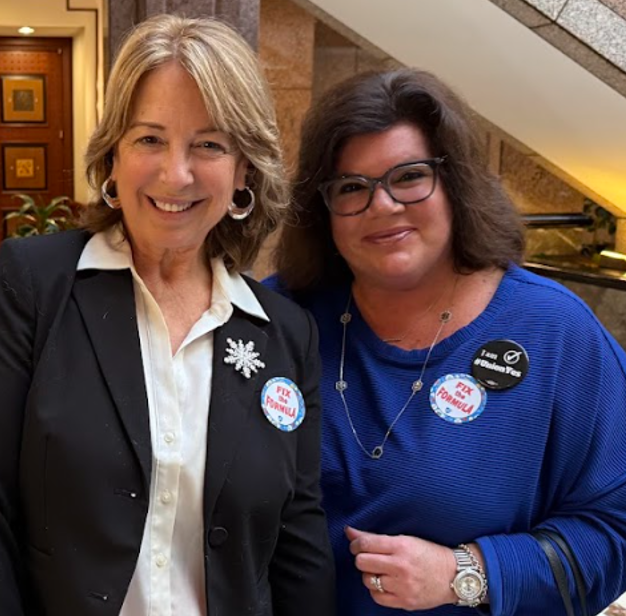
Along with her work supporting literacy instruction, Scanlon has recently participated in state-level discussions about school funding. She spoke before Connecticut legislative committees, including the Appropriations Committee in February 2026 and the Education Committee on March 4, 2026, where she supported Senate Bill 7, legislation related to educational equity and updates to the ECS formula. When discussing the advocacy effort known as the Fix the Formula initiative, she explained how it was organized by the American Federation of Teachers Connecticut and supported by local unions across the state, including the WHFT. “March 4th was a call for action day in Hartford at the Legislative Office Building for the legislature to hopefully realize that the time is now to fix the formula and to increase the funds now,” she said. She also noted that the ECS formula has not been increased since 2013 even as districts continue to experience rising costs related to inflation, transportation, and special education services.
 To explain how educators showed support, Scanlon said, “The WHFT partnered with the BOE to wear blue on March 4th because we could not take everyone to Hartford to testify or attend the press conferences revolving around the ‘fix the formula’ initiative,” she said. “Teachers and students needed to be where they were, in the classroom teaching and learning. Wearing blue was a sign of solidarity.” Staff across the district wore the city’s color in their classrooms and school buildings as a way to show support for the initiative while continuing their work with students.
Scanlon also emphasized that the advocacy effort has involved collaboration across many parts of the community. She noted the participation of educators, union representatives, and school staff who supported the effort by attending budget meetings, helping mobilize colleagues, and participating in outreach efforts. She also recognized the partnership with district and city leadership, including Superintendent Neil Cavallaro, Board of Education Chairwoman Cebi Waterfield, and Mayor Dorinda Borer, who submitted testimony and communicated with state officials regarding the topic of school funding. She also acknowledged the work of union leadership and colleagues who helped organize the effort, including assistance with outreach, creating materials, and preparing testimony.
The work surrounding the ECS formula continues as educators and community members remain engaged in discussions about school funding. Scanlon explained that efforts are underway to encourage educators to contact their representatives through an organized email campaign so they can share the needs of their schools and students. Educators are also planning to attend a legislative meeting at Wilbur Cross High School on March 14, where they will have the opportunity to speak directly with lawmakers about the importance of updating the funding formula for districts like West Haven.
After nearly three decades working in West Haven Public Schools, Scanlon continues to focus on supporting literacy instruction while also participating in statewide conversations about education funding. Through her work in the classroom and her involvement in these discussions, she remains committed to supporting students and the schools that serve them.